
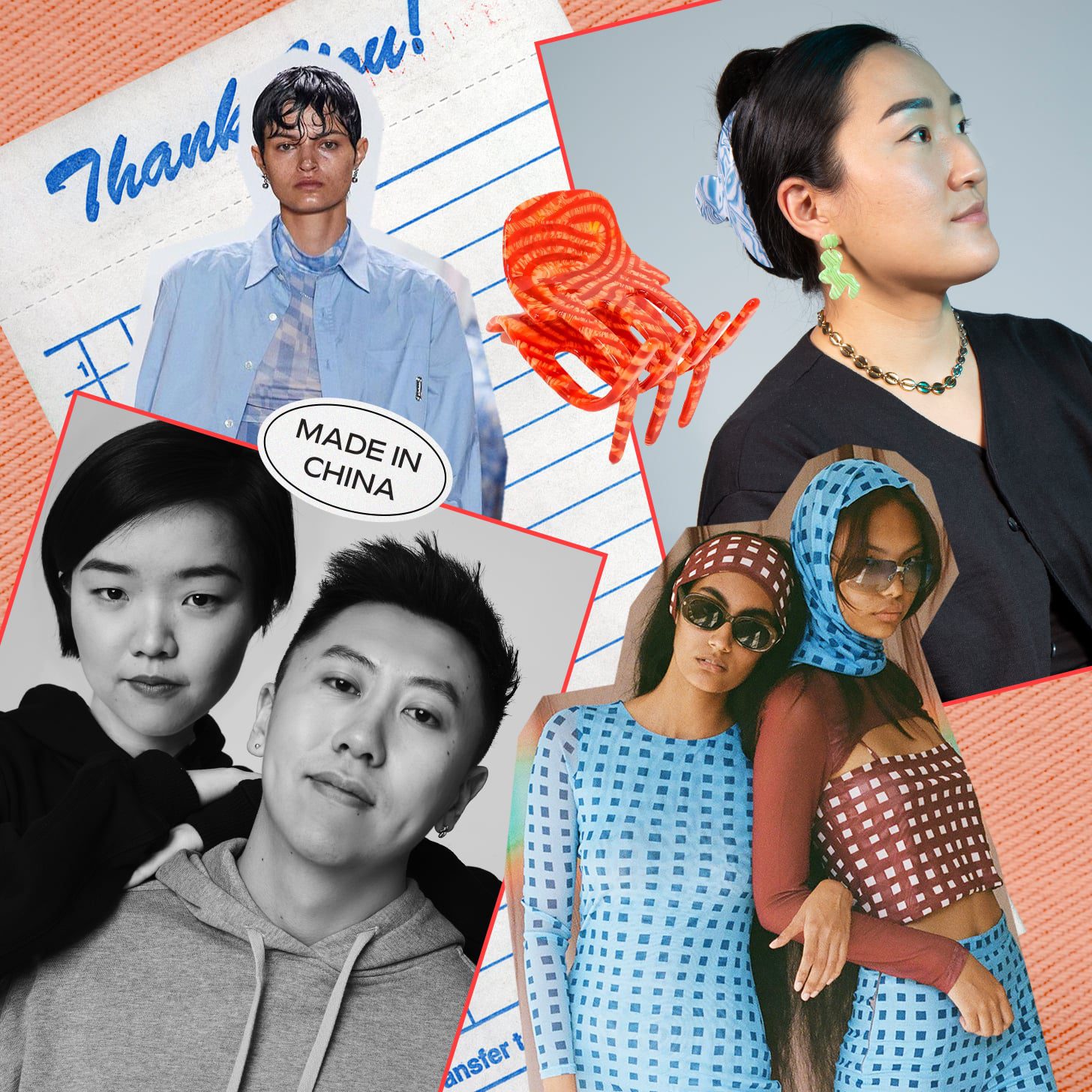
Over 65 percent of the world’s clothes are manufactured in China, yet a “Made in China” label is often met with disdain or skepticism. The stigma behind the phrase is still so common, particularly in the US, that a 2020 survey of more than 1,000 US adults found that 40 percent won’t buy products made in the largest textile exporter in the world.
Despite rapid advancements in China over the past few decades, stereotypes about the Chinese manufacturing industry abound, linking it to exploitative labor practices, complex trade relations with the US, and mass-produced fast fashion. Shoppers continue to assume goods made in China are of poor quality and prefer manufacturing in the West or any other Asian country. Yet the truth is, while not marketed widely, the majority of luxury fashion houses like Prada, Balenciaga, and Coach dedicate some part of their supply chain to production in China; they just aren’t transparent about their practices. So, why does “Made in China” carry such shame?
The stigma dates back decades. In 1979, China opened its doors to foreign trade and reestablished a trade agreement with the US, paving the way for Chinese exports to the US and American access into Chinese markets. China’s explosive trade surplus with the US brought the country into the World Trade Organization in 2001, further inciting a massive increase in Chinese exports to the US. This rapid growth, coupled with a lack of regulations in China, created unethical and unfair labor conditions to meet the demand in the US. Most notably, in 2008, China’s abusive labor ring was uncovered, following increasing labor disputes and severe abuses. These incidents likely established the stigma against goods made in China, causing “Made in China” to become synonymous with cheap, unregulated labor (and goods).


Due to a clear need for regulations, China introduced a labor law in 2008 that, among other worker protections, required employers to provide workers with employment contracts. With the textile industry as one of its biggest markets, China became the world’s number-one manufacturer in 2010 for its efficient, cost-effective labor; advanced automotive technology; and skilled technicians.
However, illegal labor practices do continue to exist in China. Most recently, China came under fire for its reported forced labor among thousands of Uyghurs in the Xinjiang region, implicating major international companies, including Ralph Lauren, H&M, and PVH Corporation, which owns Tommy Hilfiger and Calvin Klein. While these practices still exist in China — just as they do in all manufacturing countries like Italy, India, and the US — it’s not about where garments are produced, but rather who pays for the manufacturing. As is often said, there is a supply where there’s a demand, and if companies are in search of cheap mass production, there are always factories and workers willing to meet that request. And where there’s a demand for ethically sourced goods, Asian American designers are rising to meet that growing need.
A new wave of Asian American designers is leading the charge in ethical, transparent manufacturing in China, working to fight the deep-rooted stereotype, despite the politics, economics, and fashion ideals standing in the way of their work. With transparency at the forefront, these brands want to tackle the stigma behind “Made in China” head-on — because they’re prouder than ever to manufacture their beloved pieces in China. Ahead, hear from the talented Asian designers reclaiming what “Made in China” means in the American fashion industry.
Karen Lee and Tanya Lee, founders of Lezé the Label
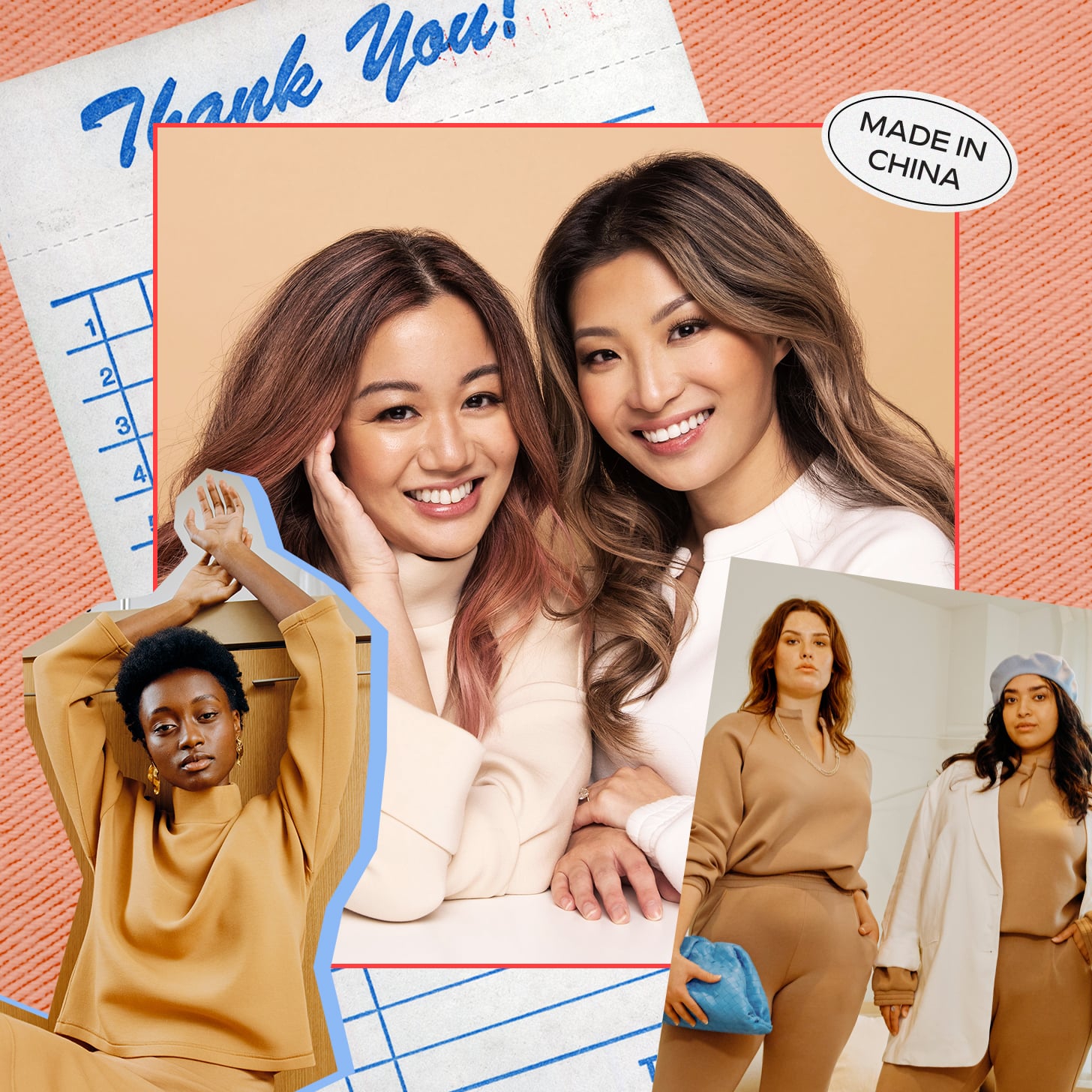
Both born in Asia but raised in Canada, Karen Lee and Tanya Lee launched Lezé — workleisure that feels like pajamas — in 2018. Lezé’s fabrics, made from coffee and recycled plastic bottles, are sourced in Taiwan, then shipped to China to knit and dye. Afterward, these fabrics are cut and sewn into their Instagram-famous soft, comfortable clothing. Sewers are paid competitive living wages 15 percent above industry standards, with structured days, legally binding permanent contracts with medical and pension packages, and advancement opportunities that bring 80 percent of women into leadership positions. All this and more of the brand’s supply chain is detailed clearly for Lezé’s consumers. Here, the founders open up about fighting the stigma against the “Made in China” label amid anti-Asian hate.
When the Atlanta spa shootings happened, we were extremely conflicted on how we wanted to show up on social media. Should we stick to clothes? How do we handle this situation? We were both emotional, but at the same time, we thought, is this too personal? We talked about the most authentic way for us to show up, and we decided our lane was through speaking to manufacturing because it’s so important to the brand, and it’s also advocating for people living in China.
That’s what opened the door to our series called “Made in China,” where we posted Reels breaking down the stuff that happens behind the scenes. The comment section was lit. Everyone came with different perspectives, and it was cool because we were able to have this open conversation and learn from one another. But it was also hard because people come for your decisions, your morals, your character. There were definitely comments that said, “I liked it better when you just stuck to clothes,” or, “Where do you manufacture? Because I don’t want to buy anything that’s Asian-made or made in China.” Before we would put out a post, we’d have to be ready. We had to be in a space to have these tough conversations.
But I think as long as we’re responding with grace — that’s been our key — we’re OK with these interactions because we’ve got each other, too. The best thing we can do is continue to share the behind the scenes of our factories: being thorough about who’s making our clothes, the process, the machines, and being able to receive questions like these with grace and not with offense. Hopefully, that changes the narrative a little.
“Manufacturing in China was an intentional choice for us.”
Manufacturing in China was an intentional choice for us. When we launched on Kickstarter in 2018, we actually first started manufacturing in Taiwan. It made sense to start there because we wanted to use what we had on this Earth. Then we found the sewers there for the cut and sew portion of our garments were actually an aging group, so we started looking again. We were not fashion designers, so it made sense for us to go where all the knowledge and technology was available: China. We needed every tool that we could get to help support us in this journey.
Because we’re both Chinese, we were also curious to explore the stigma behind “Made in China” and learn why this was happening. We’re really proud of the processes we’ve taken in our manufacturing, and we wanted to shed light onto it because a lot of people just don’t know. And when you don’t know, you’re afraid of it. We wanted to create a safe space to have this kind of dialogue and hope someone could learn something.
Brands are afraid to have that open conversation about why they’re manufacturing in China. Bad manufacturing actually happens everywhere. Even in North America, there are people who are overworked and underpaid, but people will see the “Made in Canada” or “Made in USA” label and automatically think it’s OK. We want to shed light on the fact that it’s not where you manufacture, it’s who you manufacture with because there are exceptions in pockets, no matter where you are in the world.
But until a lot more brands jump in on this conversation, it’ll take some time to reverse the stories a lot of us are very used to. I think we’re getting there. People are starting to ask more questions, so we’re heading in the right direction.
Tiffany Ju, founder of Chunks
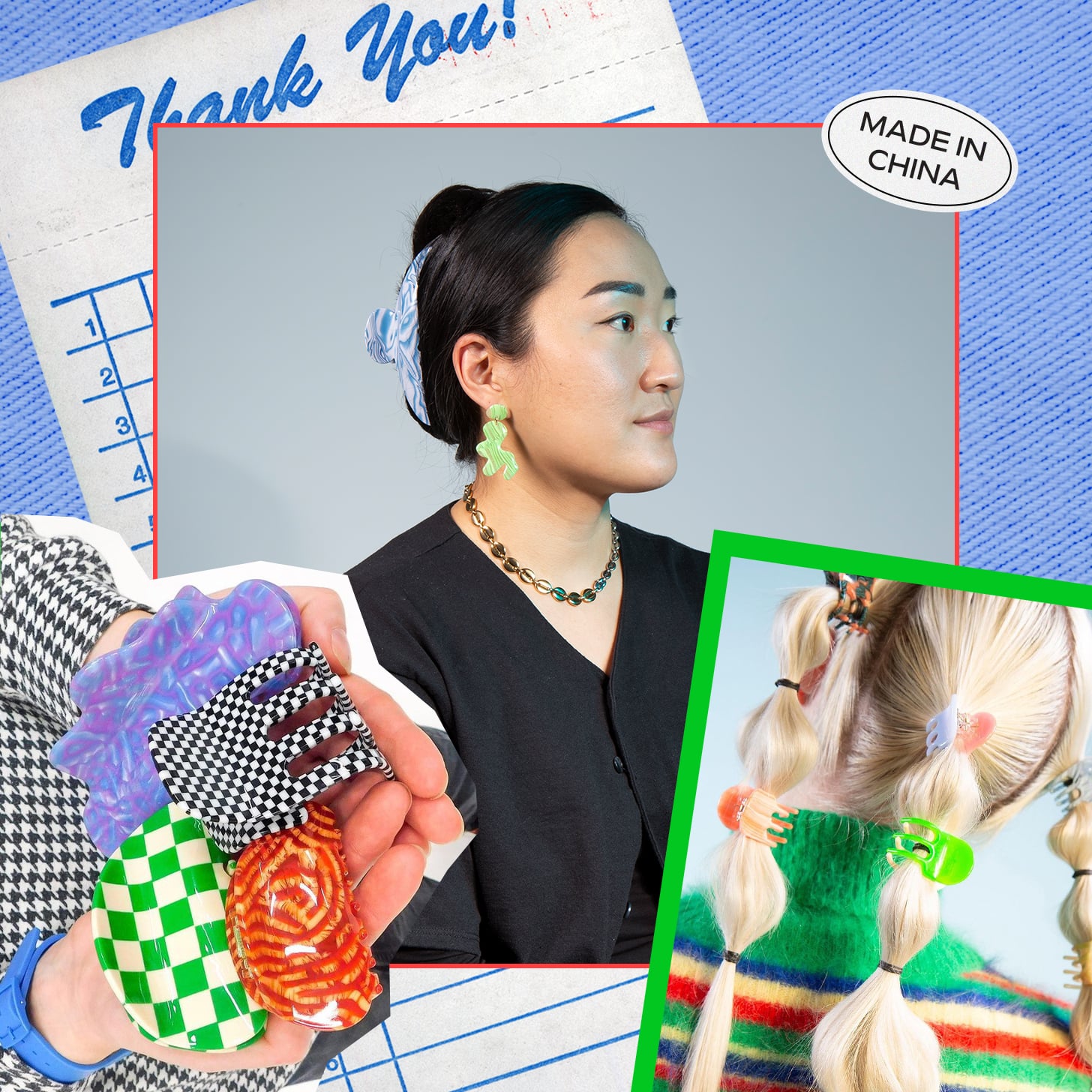
After searching — and failing — to find cute hair accessories on the market, Tiffany Ju launched Chunks, a brand known for its quirky claw clips and barrettes. Chunks evolved from the Korean American designer’s previous accessory business: her Pinterest-famous ombré tights. Proudly and responsibly made in Jinhua, China, the brand is committed to using high-quality acetate instead of the more common petroleum-based plastics to create less waste. Ju designs the accessories on her iPad from Seattle and sends the drawings to her vendors in China, who’ll create a sample. After constructing the perfect sample, the goods are produced in China and sent back to the Chunks warehouse in Seattle, where they’re packed and shipped to customers. Here, Ju shares her thoughts on the “Made in China” stigma and why it should be obsolete.
Coming from the maker world, I felt a lot of stigma around “Made in China.” I’ve always had a positive experience with Chinese manufacturers, so that’s why it became a part of my messaging. I say “proudly” because it’s true. I couldn’t get this quality of product for this price point anywhere else. I found them to be quick, good quality, affordable, and easy to work with. The communication was efficient, and the turnaround times were great.
It’s interesting to use these words “Made in China” to disrupt our assumptions because they’ve become so ubiquitous. It’s almost a meaning in itself, those three words. Adding that extra “proudly,” it piques people’s interests because we all have such a strong stereotype or assumption about what’s made in China. It’s a great conversation starter.
“China’s quality of manufacturing is evolving more quickly than our assumptions are, so it’s time to start thinking about Chinese manufacturing in a different way.”
The fault of that stigma lies on the companies hiring the manufacturers to make their product. It’s not where you get stuff made, it’s who makes them. And I’m not talking about the factories, I’m talking about who’s hiring the factories. Because they’re the ones that are saying, “I need this thing for a dollar less than you quoted me.” Chinese manufacturing is filling the need that’s coming to them. That’s an important thing that we overlook and scapegoat.
But the stereotypes about Chinese manufacturing do have an origin of truth. In the ’90s, it was definitely the Wild, Wild West of manufacturing, just like when the US was becoming a manufacturing country. Any country that goes through that kind of manufacturing growth, it’s going to get a little iffy sometimes, but those salacious stories really imprint into people’s minds.
I think “Made in China” became synonymous with low quality, especially with luxury, because there was a huge counterfeit industry of fake luxury coming from China. It’s all about what we’re used to or what our impressions are. Now, there’s this whole movement for luxury made in China. China’s quality of manufacturing is evolving more quickly than our assumptions are, so it’s time to start thinking about Chinese manufacturing in a different way.
We put such moral connotations on things like, “This is bad, or this is good.” In reality, Chinese production isn’t necessarily all good or all bad. It’s nuanced, just like everything else is. I want to be able to give more of a nuanced, well-rounded view, because manufacturing can be something we’re quick to make assumptions about, because we don’t know much about it. The more we can talk about it and show what it looks like, it offers people more context to have a better understanding of what it is.
Transparency is the best form of progress. We’re not saying we’re perfect. What we’re saying is that this is our journey toward improving our responsible manufacturing mission, and transparency plays into that so much. We’re not getting everything right, but let me show you what we’re doing and where we want to go.
Siying Qu, cofounder of Private Policy
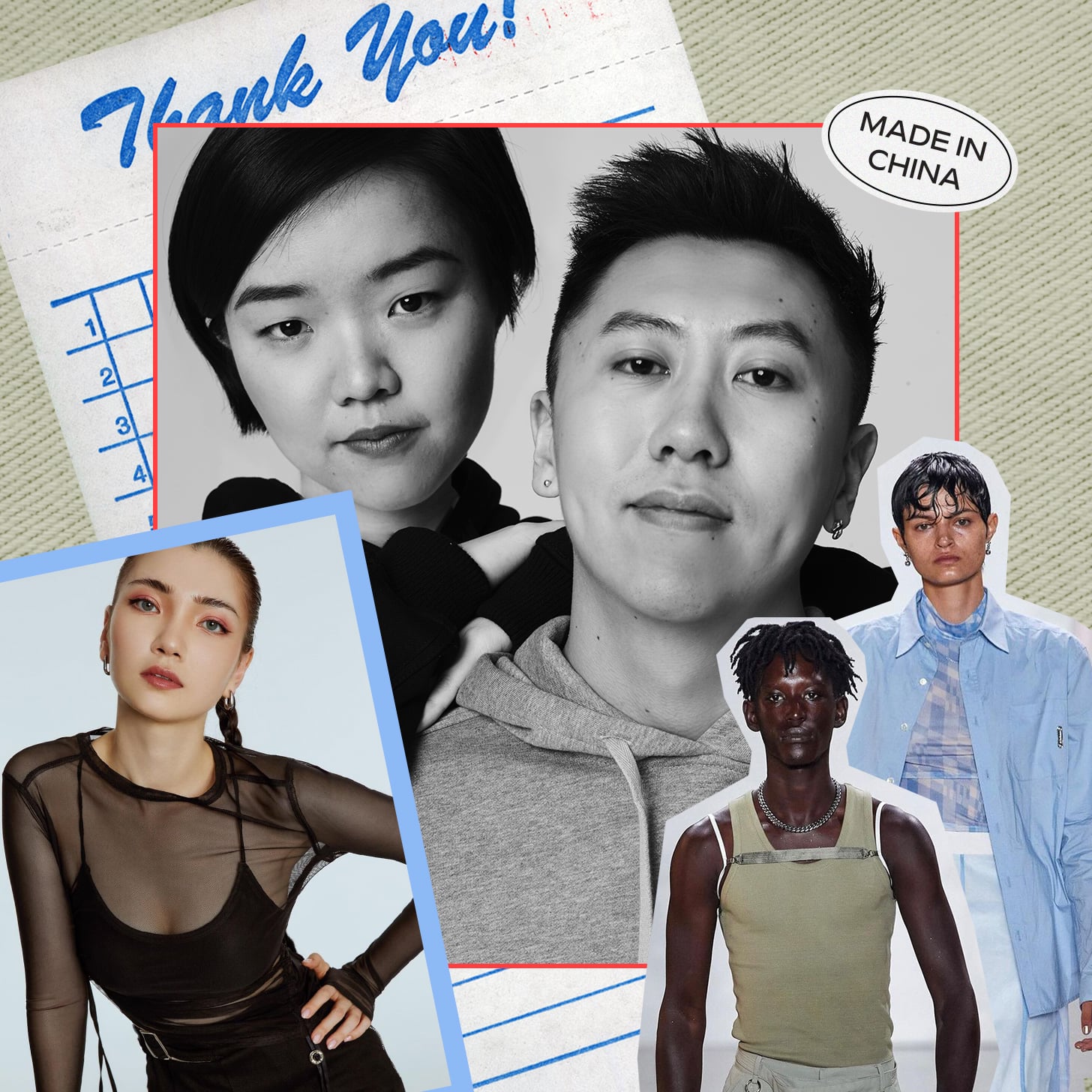
Born and raised in China, Siying Qu first came to America as a cultural-exchange student in high school and eventually went to Parsons, where she met her cofounder, Haoran Li. While Qu feels like she’s part of the Asian American community, she doesn’t fully identify as American. She still has moments when she feels like a foreigner, particularly during the pandemic. In 2015, the duo launched Private Policy, a gender-inclusive clothing brand inspired by New York youth culture. Designed in New York and produced in Shanghai, China, the brand tackles a different social issue every season, like the erasure of the Chinese workers who helped build the Transcontinental Railroad or the dark side of big pharma in America. Here, Qu speaks on why anti-Asian hate drove the brand to greater manufacturing transparency.
Recently, I heard someone in the fashion industry say, “Our stuff’s made in China, but don’t tell anyone,” while I was standing right there. It hit close to home. It was emotional.
“Before, people may have not known we were made in China, but with the recent surge against Asian hate crimes, we actually chose to make that more apparent.”
Before, people may have not known we were made in China, but with the recent surge against Asian hate crimes, we actually chose to make that more apparent. We’ve thought about the negative impact to the business for being outspoken about what we believe in and our heritage, but we decided not to be afraid of that. It made us become even more active in supporting the Asian American community. We try to showcase our culture and heritage in every way possible and start that communication, because we want to be more proactive in fighting this kind of xenophobia.
Haoran and I are both from China, and we’re proud of where we’re from. It’s great to also have that collaboration with people from our home country. We don’t want to hide from that, because at the end of the day, if customers do have certain feelings about manufacturing in China, we don’t want to lie to them either.
In the beginning, around 2016, we spent a lot of time finding the right factory that aligned with all of the requirements that we had: work environment, worker compensation, health and social security, and environmentally friendly packaging. We actually did a first look for options in New York because we thought it’d be easier management-wise to produce everything within our reach. But we realized we’d probably be at a different price point and feel limited with technique.
After weighing the advantages and disadvantages, we made the decision to manufacture in China because of the special techniques and mature industry. In the end, we think the quality we get, without compromising our standards about work environment, has made it possible to produce in China. It’s important for us to have production aligned with design and style, as well as quality. Especially as a small company, it’s important for us to visit the factory and see the workers and their conditions with our own eyes.
For the brands like us that are made in China, we have to put down this stigma ourselves. If you manufacture in China and you feel ashamed about it, maybe there’s something wrong with the factory you use, or it’s not aligning with your brand. Then maybe you shouldn’t produce there, instead of hiding it. Or maybe there’s a historical prejudice or a social-political point of view about China as a country or the government that you don’t want to associate with. And especially with a lot of luxury brands, perhaps you want to hold onto your European or American heritage.
The stigma is beyond the label or tag on your clothing. We’ve thought, if people like our products and think they are good quality, then maybe that will change the stigma against “Made in China.” But hopefully, more companies can be more transparent about where their product is made. Because often, if they do feel the pressure, people may raise questions about work conditions or environmental responsibilities, and that’s not something to shy away from. It’s not about where your product is made, it’s about your company’s standard and how to keep that transparent.
With that said, as a part of the production system in China, we still want to hold ourselves and the factories accountable. There’s definitely room for improvement, but there’s recognition and acceptance deserved as well for products made in China.
Su Paek and Stephanie Callahan, founders of Find Me Now
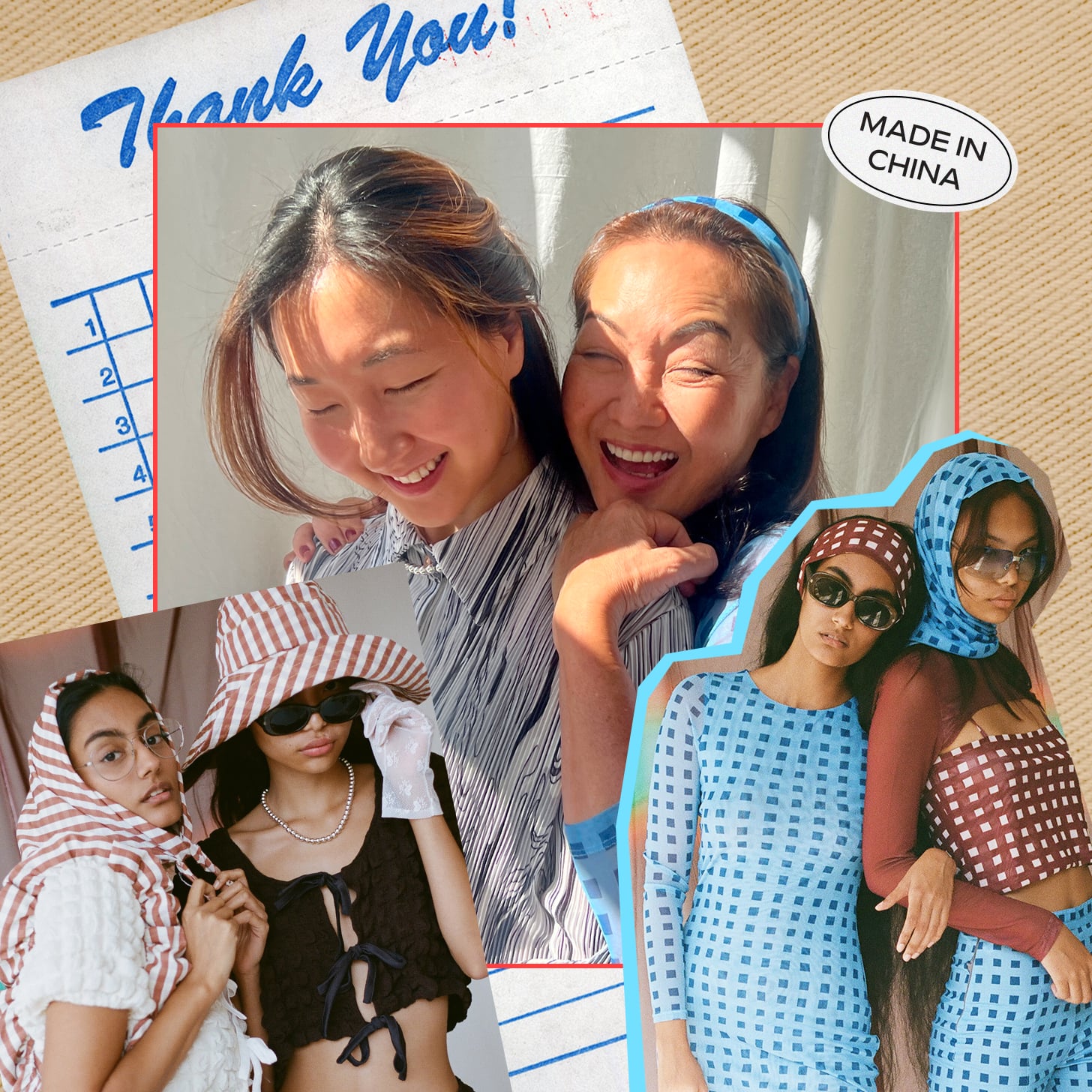
Mother-daughter duo Su Paek and Stephanie Callahan launched Find Me Now in 2020, after their previous occasionwear business started to feel unsustainable. Paek, who was born in Korea, grew up in Brazil, and later lived in Hong Kong and New York, identifies as a third-culture individual. Her daughter, Callahan, is a second-generation Korean American. Fundamental wearability is at the core of Find Me Now, which is designed in Long Island City, NY, and ethically sourced and produced at small-scale, women-owned factories in Ningbo and Shanghai, China. Paek, a 30-year industry veteran who had seen fashion production move from the US to China firsthand in the ’80s, wanted to maintain the previous relationships she’d formed with her vendors and factories in China. Here, the mother-daughter designers discuss their commitment to transparency to combat the “Made in China” stereotype.
When COVID hit and all of our orders were canceled, we hit rock bottom financially, emotionally, and personally. That gave us the pause to take stock of what we have and reprioritize. It was a massive mindset shift and a true personal-growth journey that kick-started Find Me Now. Now, we’re able to bring our perspective back to the table and take the resources that we have and do better in this space.
We were working with massive retailers, and they were just not the kind of principles and values that we really believed in. We felt like there was something we could do with more purpose. On the other hand, we also wanted to maintain our vendor relationships, our factories in China that [Su] worked with for almost 20 years. There’s the credibility and trust.
Before we started Find Me Now, when we used to live in Hong Kong, we would spend Monday through Thursday in China, on the factory floor, in the sample room. We know who’s in charge of the pattern making, sample room, cutting, sewing, packing, and quality control. We know who they are, we know their families. We know where they’re coming from.
“Our production in China is over 50 percent of what makes up Find Me Now. This is where 100 percent of our products are coming from. Our customers, our audience, they need to know we wouldn’t be here without them.”
A big part of [our] content strategy for Find Me Now is showcasing our production process, to make the customer feel like they’re connected to the product they’re buying into. When you’re buying into a brand, it’s easy to get caught up in the whimsical branding message, but at the end of the day, these products are coming from our factory. It’s so easy to conceptualize, come up with a tech pack, and design a piece, but there’s a person who’s actually touching, printing, sewing, and removing all the little tiny threads from the garment that you’re going to buy.
We’ve had firsthand experience with unethical production, and it happens when you don’t know where your production is. If you’re living in New York and you have a fashion brand where you’re working with a factory in China, and you’ve never met or seen them, you actually don’t know what’s happening. You don’t even know if they’re producing the goods. They might be subcontracting another factory, and it might be made somewhere else. That’s how unethical production happens; when you don’t actually know the source, and sometimes a lot of people don’t bother to ask those questions because it’s just inconvenient. The work ethic and the quality of the products coming out of our factory and out of China is unmatchable. It’s something we’re extremely proud of, so we have to share that. To be completely honest, it’s also a great selling point.
The stigma has lasted centuries and centuries. [Su comes] from Seventh Avenue in New York in the ’80s. We were very clear about the reason we were going to China — the number-one reason was the price. Once we tasted that price and markup structure, we never came back. Even with all the stigma, everywhere you go — Macy’s, Bloomingdale’s, Nordstrom — every single national brand is made in China. It’s the demand of the American consumer and American corporations.
At the end of the day, creating a brand is just about sharing your perspective. That’s what marketing is. Our production in China is over 50 percent of what makes up Find Me Now. This is where 100 percent of our products are coming from. Our customers, our audience, they need to know we wouldn’t be here without them.
Image Source: Receipt: Getty Images
Source by www.popsugar.com
