
Wong Wing-yan has taken to closing the doors of the empty bedrooms at the suburban Hong Kong nursing home where she works, so she doesn’t have to think about the residents who once occupied them. Some of the rooms are now being used as haphazard storage closets, stacked with mothballed furniture, wheelchairs, and boxes of personal protective equipment (PPE). Marks left by tape can still be seen on the walls, where photos of loved ones were once displayed.
“There are many empty rooms now,” said Wong, a bespectacled nurse in her thirties, as she walked TIME through the facility in late April. “I’ve known [the inhabitants] for so long, and now when I see those empty rooms, I am depressed.”


COVID-19 finally came to the Kei Tak (Tai Hang) Home For the Aged on Feb. 13, after sparing it for two years and four previous waves of the disease. The next day, 17 residents tested positive. The day after that, it was 30. Soon, 98% of the residents had been infected—and after two months, 27 of the nursing home’s 200 residents had died.
“Our elderly home turned into a battlefield as hospitals were overloaded and the healthcare system collapsed,” said Wong, who has worked at Kei Tak for more than 10 years.
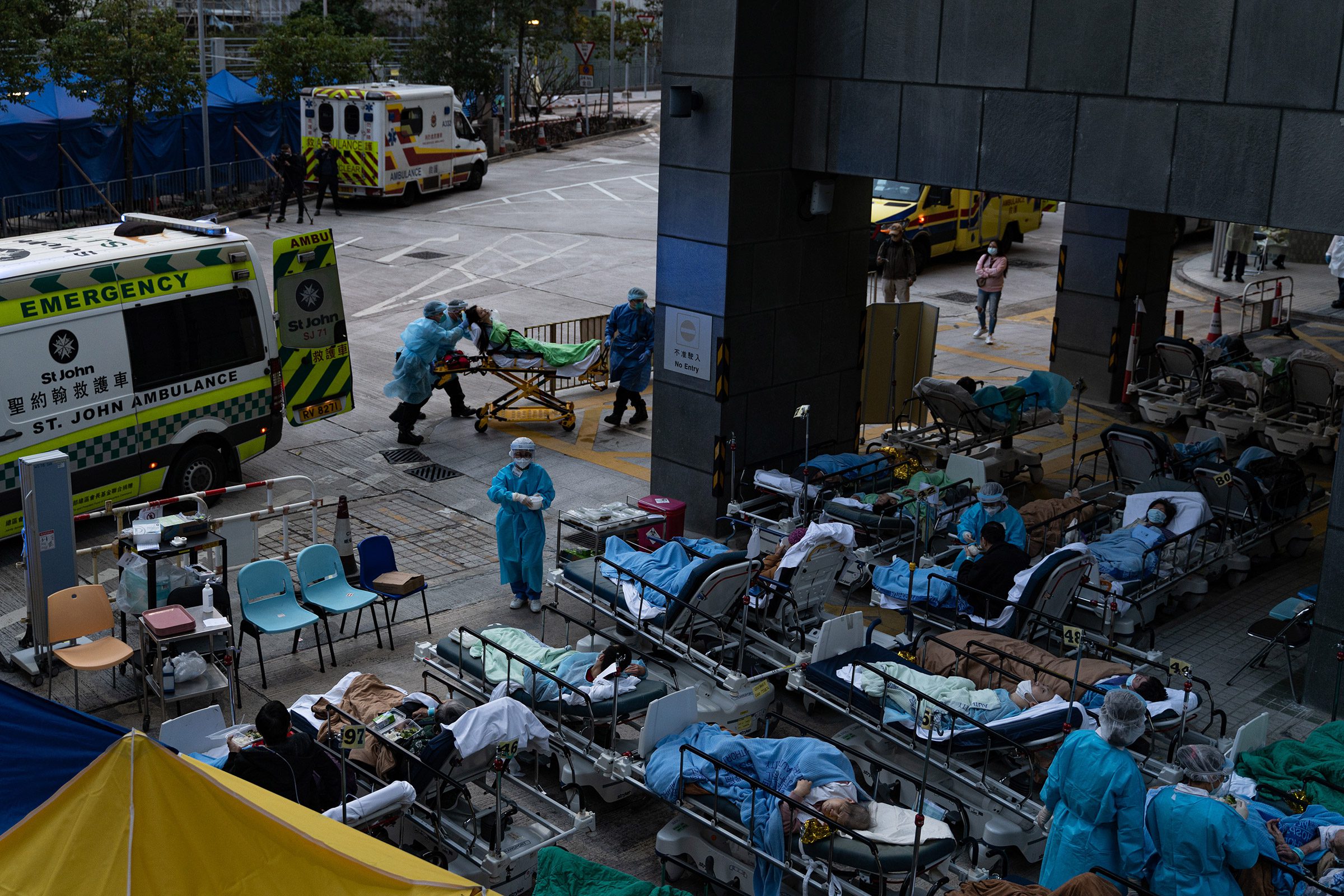
Patients lie in a temporary holding area outside Caritas Medical Center in Hong Kong on Feb. 16, 2022.
Leung Man Hei—NurPhoto/Reuters
She was a foot soldier in Hong Kong’s battle against the fifth wave of COVID-19—a fight the city spectacularly lost. For much of February to April, Hong Kong turned from pandemic success story to the place with the highest COVID-19 death rate in the world. Out of a population of 7.5 million, some 9,000 lives were lost in a 10-week period as Hong Kong appeared to be taken off guard by the highly contagious Omicron variant.
The hospital system was quickly overburdened. Horrifying photos began circulating on social media of frail, mostly elderly people, bundled in blankets, lying on gurneys in the driveways of hospitals too full to accommodate them. Morgues filled up, and thousands of corpses had to be kept in refrigerated containers. In some hospitals, body bags were piled up between the beds of still living patients. Coffins could not be obtained quickly enough and crematoriums struggled to keep up with demand, leaving many bodies to decay before they could be buried or cremated.
Read More: How Hong Kong Became China’s Biggest COVID Problem
The tragedy took place despite vaccines being widely available for a year prior and Hong Kong imposing some of the toughest infection control measures in the world—including periodic entry bans for non-residents, mandatory quarantine for travelers, strict mask mandates, a mandatory track-and-trace app, and quarantine camps or hospitalization for anyone testing positive. But overreliance on such measures led to vaccine complacency. An alarmingly low vaccination rate among the elderly made that population especially vulnerable, once faster spreading variants appeared. In January, only about 25% of Hong Kong residents aged 80 and older had been jabbed, with the rate among care home residents even lower. Almost all of those who perished in the fifth wave, about 72%, were unvaccinated.
The heavy toll at Kei Tak mirrored what was happening at other elderly care facilities. By the end of the fifth wave, about 1.5% of all Hong Kong residents aged 80 or over had died, with the vast majority of those fatalities in nursing homes. Now, as COVID-19 begins to spike in the city once more, it’s not clear that Hong Kong has learned the lessons from earlier this year. On July 25, the government announced three new deaths from COVID-19, all over the age of 70. Two of the dead hadn’t received any vaccine doses at all. The vaccination status of the third has not yet been reported.
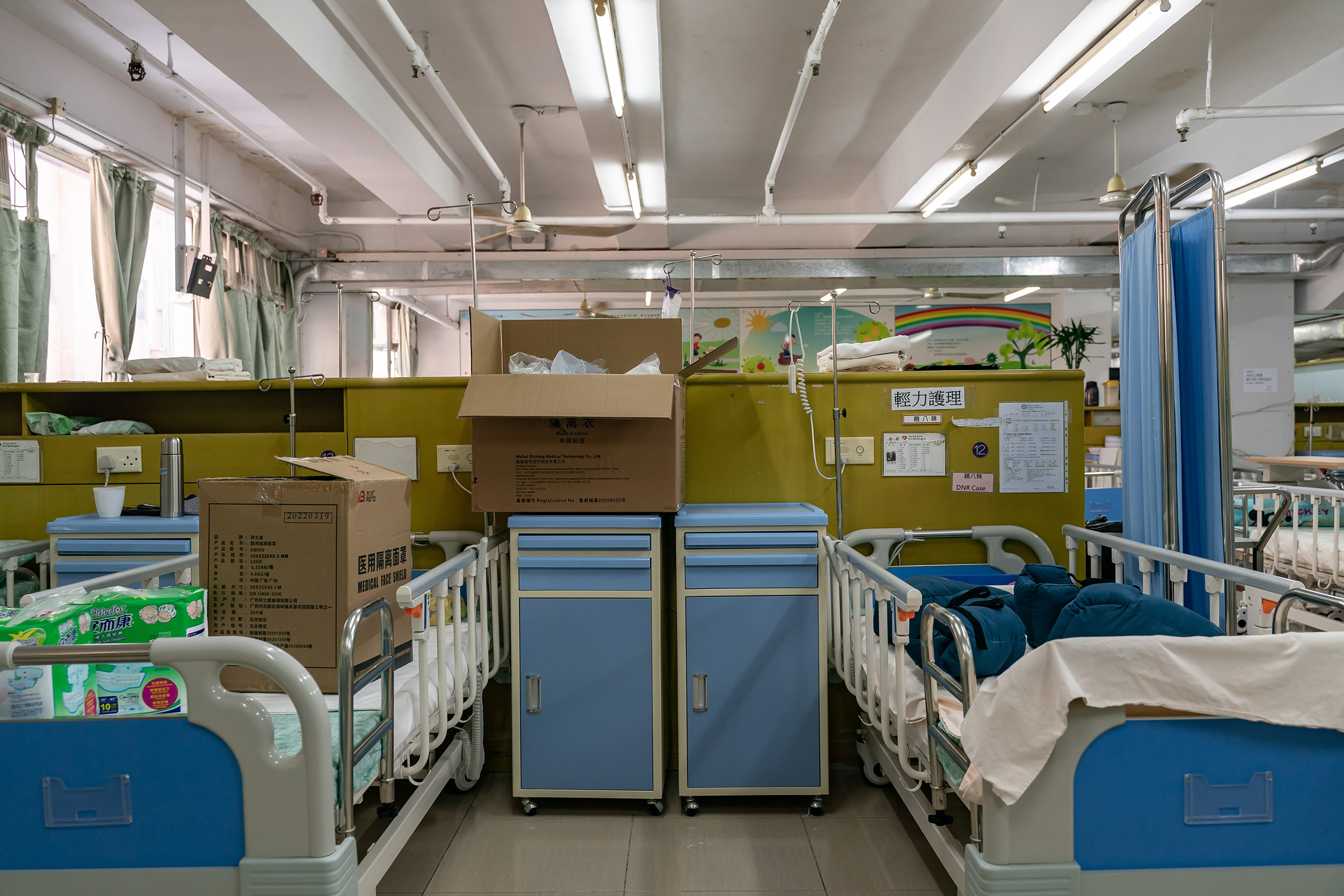
Boxes of supplies pile up on beds normally reserved for residents requiring special care, Kei Tak (Tai Hang) Home for the Aged, on May 6.
Anthony Kwan for TIME
Hong Kong’s vaccination campaign failed its elderly
Most experts attribute the high toll of Hong Kong’s fifth wave to the low rate of elderly vaccination.
The authorities have made two vaccines available at no cost to the public: CornaVac, an inactivated virus vaccine developed by mainland Chinese firm Sinovac, and an mRNA vaccine manufactured by BioNTech in Germany that uses the same technology as the Pfizer vaccine widely used in the United States. Wong says she and other nurses at Kei Tak tried their best to get their residents jabbed, but in many cases this required authorization from the residents’ families, who were often hesitant, fearing that underlying conditions like high blood pressure, or a history of strokes, made elderly people unsuitable recipients of a dose. This was despite the fact that vaccines were being safely administered to millions of patients with those conditions in the U.S. and Europe.
Read More: Global Shortages Loom as China’s Lockdowns Continue
Unfounded rumors circulated about deaths linked to vaccination. Local newspapers sowed stoked fears by repeatedly publicizing instances of people who died within 14 days if being vaccinated—even if vaccination played no part in the fatalities. Government messaging added to the uncertainty. On Mar. 6, then health secretary, Sophia Chan, suggested “to the public that if they are uncertain about their own situation whether they have serious chronic illness or uncontrolled chronic illness, they can actually consult their family doctors to understand more before they make a booking for vaccination.”
In such an atmosphere, many people in aged care, and their families, simply concluded that vaccines were risky. The consequences at Kei Tak were grimly predictable.
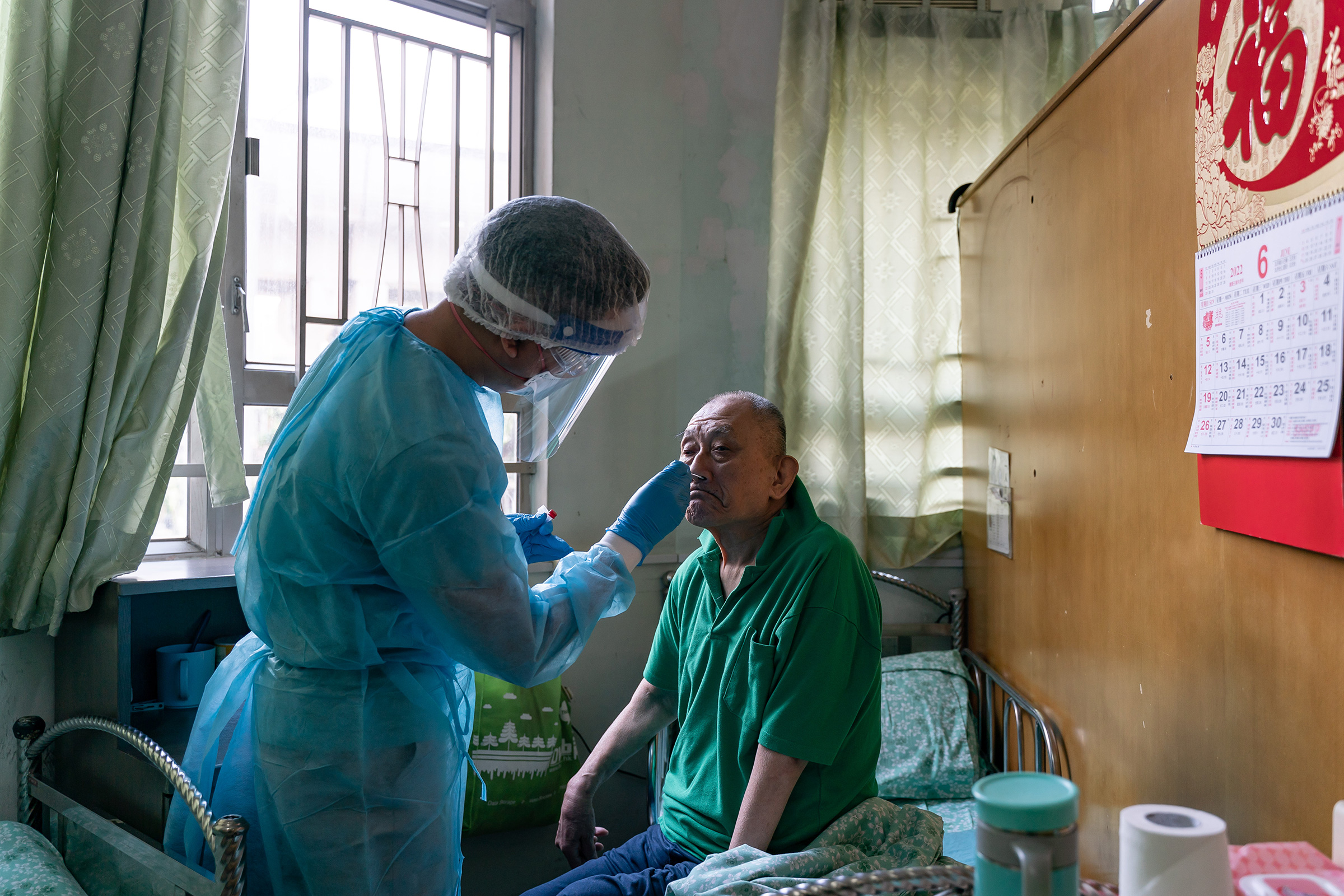
Dr. Poon Yui Pan, deputy head of Hong Kong’s Kei Tak (Tai Hang) Home for the Aged, conducts a rapid antigen test on a resident.
Anthony Kwan for TIME
Poon Yui-pan, a 42-year-old doctor and the deputy head of the facility, said he tried to treat infected residents with acetaminophen, ice packs, and vitamin C he bought from the local supermarket. Calling emergency services didn’t bring immediate assistance. At the height of the fifth wave, wait times for an ambulance stretched more than 30 hours, according to local media. Hospitals were so crowded that many in Hong Kong recovered while waiting for a bed.
Like many other nursing homes, Kei Tak did not have enough space to keep infected residents isolated, and the virus spread uncontrollably. The facility struggled with staff shortages as some workers, worried about catching the virus, stopped coming in or quit. Wong tested positive for COVID-19 herself, but continued with her duties. The residents she looked after had all contracted the virus by then. “I felt a great sense of responsibility to take care of them,” she says.
Read More: The Chinese Public Is Divided Over Its Zero-COVID Approach
Wong recalls a particularly cherished, 92-year-old resident that she called kai ma—Cantonese for godmother—and anxiously touches her necklace while she talks about how the woman’s family had declined to have her vaccinated. She reminisces about afternoons spent with kai ma, watching her favorite TV show, a local drama from the 1990s. The resident, who was a farmer when she was younger, was always smiling and often shared stories about her family. At mealtimes, she would always ask if Wong had eaten before beginning to eat herself.
“She was like family to me,” the nurse says.
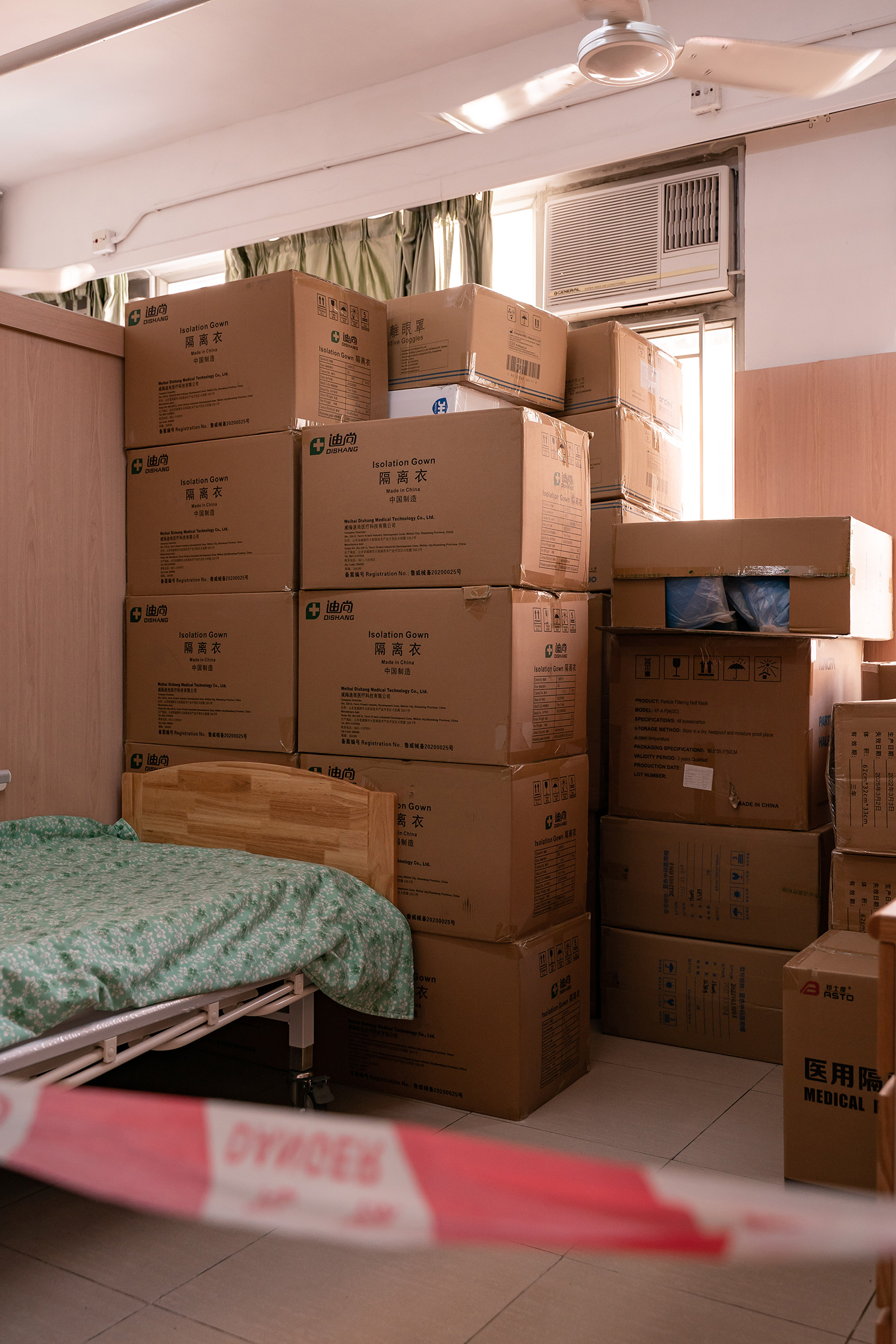
Pandemic supplies are stored in an empty bedroom at the Kei Tak (Tai Hang) Home for the Aged, Hong Kong
Anthony Kwan for TIME
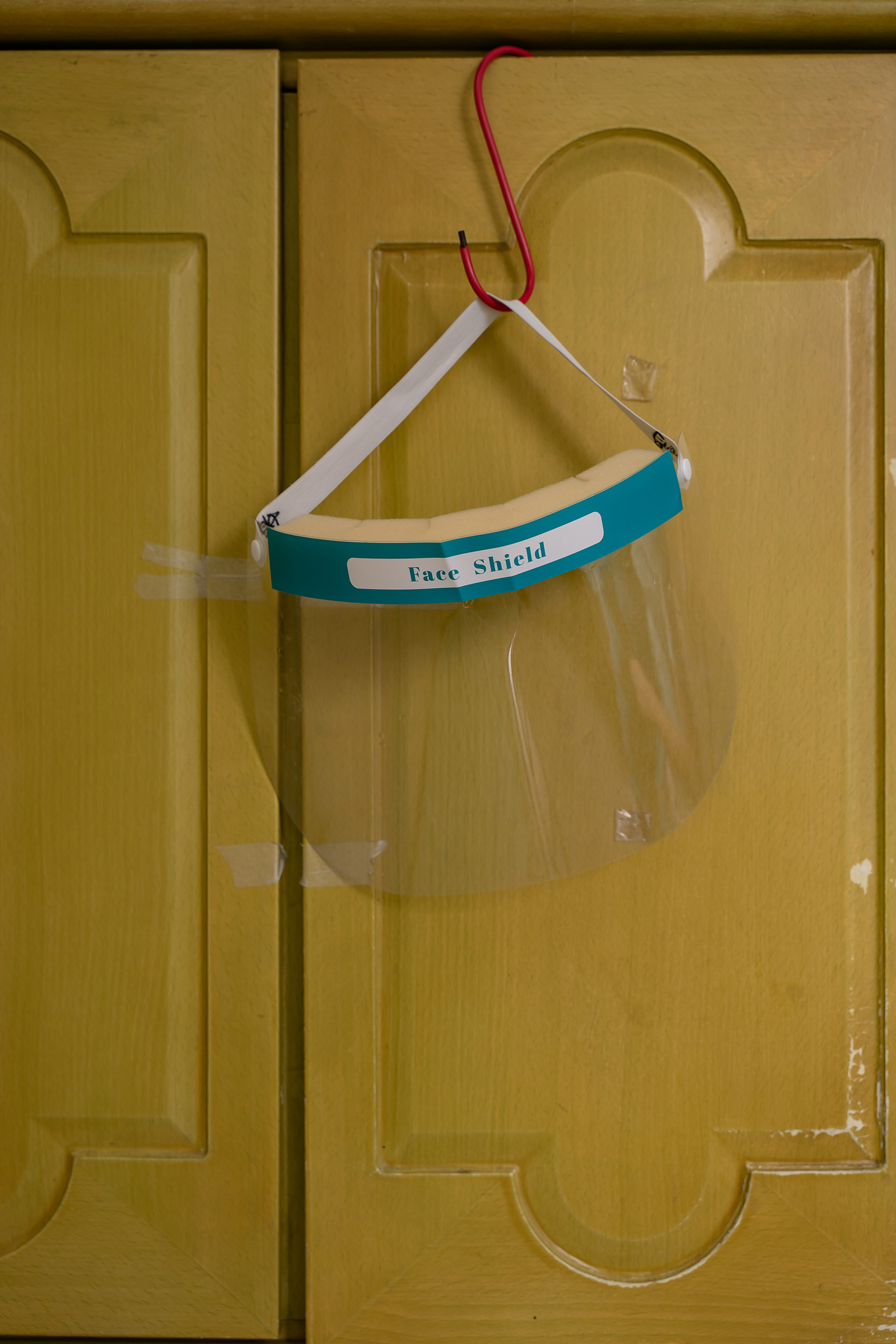
A face shield hangs on a cabinet at Kei Tak (Tai Hang) Home for the Aged, Hong Kong
Anthony Kwan for TIME
The elderly lady died during the fifth wave, one of many Hong Kong’s COVID-19 victims who have passed away in relative anonymity. There has been little public expression of mourning for the many lives lost. No memorials have been erected and the local press is oddly devoid of stories about the lives of those who died. The family members of several patients from Kei Tak nursing home who died of COVID-19 declined to be interviewed by TIME or even have the names of their family members shared.
Very few people feel comfortable talking about death. But in Hong Kong, the reticence is particularly acute. “In Chinese culture, people avoid talking about death because they believe it may bring bad luck,” says Chan Kai-woon, a 31-year-old funeral director.
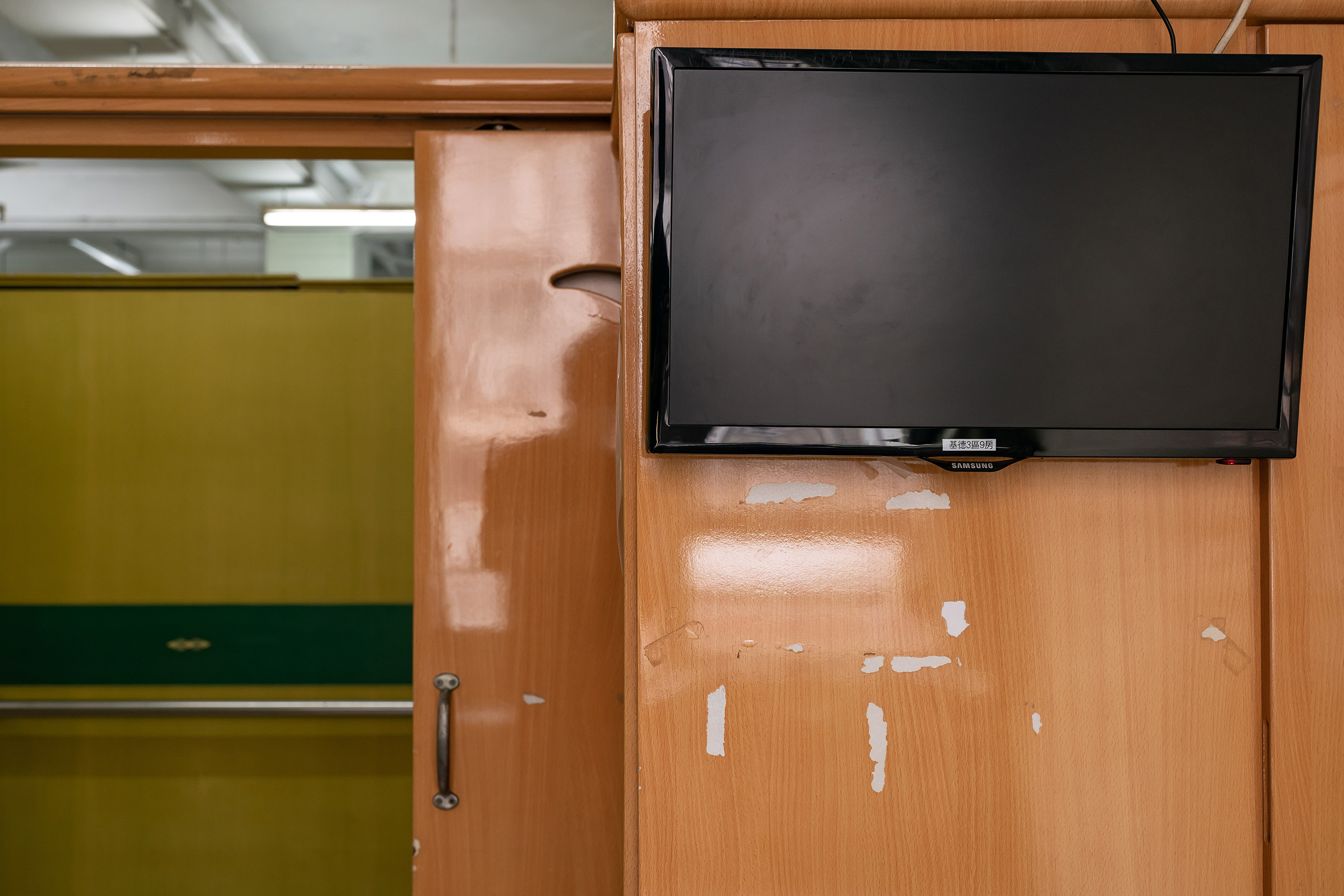
Marks left by tape that once held up family photos, seen in a dormitory space that belonged to a resident who died of COVID-19, Kei Tak (Tai Hang) Home for the Aged, Hong Kong.
Anthony Kwan for TIME
Accountability for Hong Kong’s pandemic failures
Months later, there still has been no real reckoning over the large number of preventable deaths.
In a rare admission, the city’s then leader, Carrie Lam, said in a mid-June interview with Bloomberg TV that her administration could have done more to prevent elderly deaths with a stronger vaccination drive. But when asked if she wanted to apologize to the Hong Kong people for anything that happened during her tenure, she said no. In her last appearance in the legislature in late June, outgoing health chief Chan ignored questions about whether she was personally responsible for the fifth wave.
Some things have since improved. COVID-19 vaccines are now mandatory for new nursing home residents. The government has also sent outreach teams to elderly homes and began offering a home vaccination service for those 70 or older. The vaccination rate is higher, but still, on July 20, only 59% of the population aged 70 to 79, and only 38% of those 80 and older, had received three doses of a vaccine. By contrast, 80% of people 75 and older in the U.K. had received a fourth dose by May 2022, two months after they became eligible.
Read More: Taiwan Is Abandoning Its Zero-COVID Strategy
For now, the city is still clinging to social distancing, track and trace, mask mandates and other COVID-19 countermeasures in a bid to protect the unvaccinated. That could be problematic. Hong Kong reported 4,276 new cases on July 26, and officials are again warning that the hospital system is in danger of becoming stretched. Spikes may occur if the government yields to intense pressure from the business community to open Hong Kong’s borders and loosen COVID-19 controls.
About 100 care homes had reported new cases by early July, though Grace Li Fai, chairwoman of the Elderly Services Association of Hong Kong, told local media that transmission chains are being cut off faster, due to increased testing for staff and residents. Instead, it appears that COVID-19 is spreading among elderly who don’t live in care facilities. Only about 10% of those currently hospitalized for COVID-19—the great majority of whom are over the age of 65—are residents of care homes, according to the South China Morning Post.
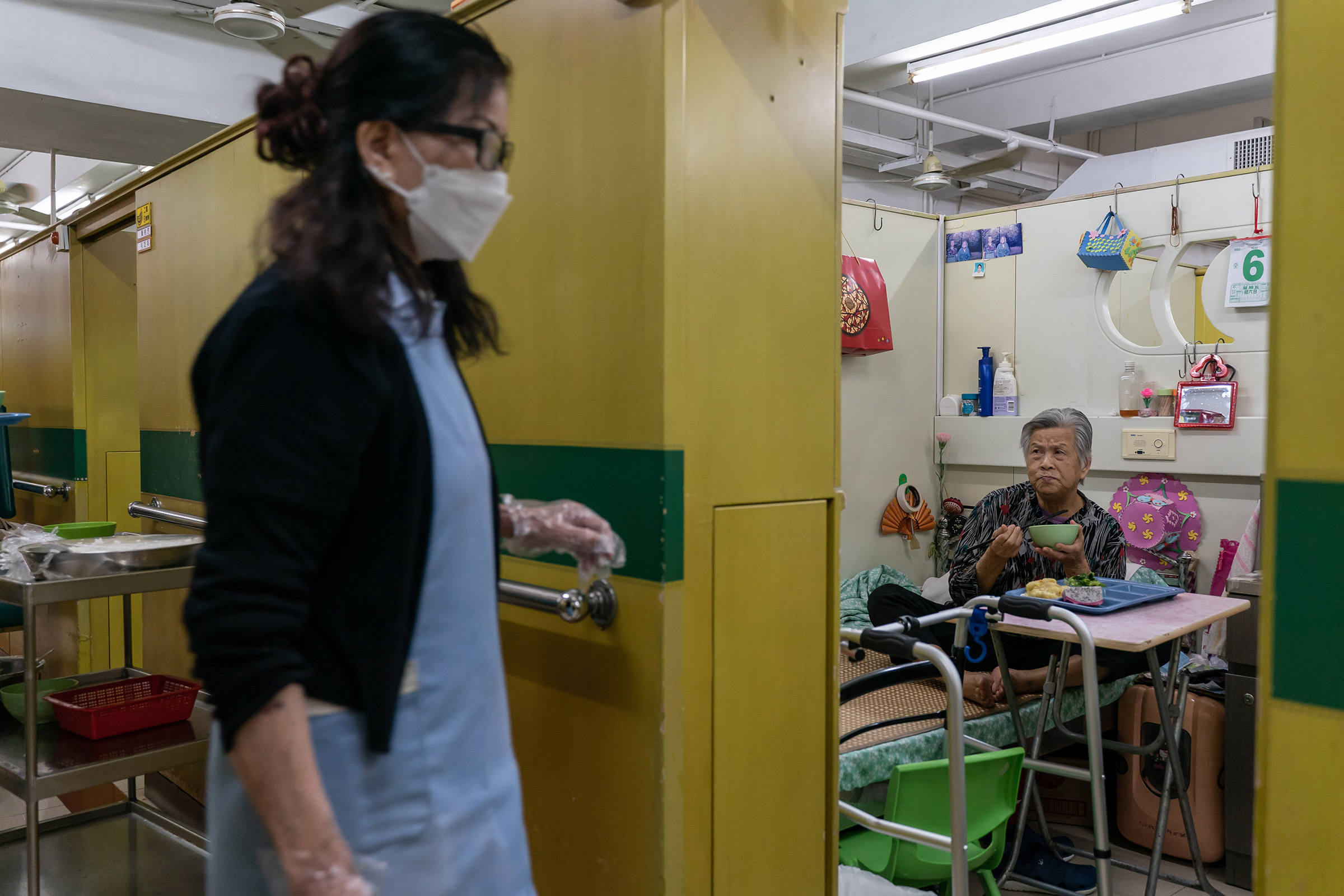
Yip Fung-cheung, 82, a resident of Hong Kong’s Kei Tak (Tai Hang) Home for the Aged, eats dinner in her dormitory space.
Anthony Kwan for TIME
Wong says that life is moving on at Kei Tak. Residents who were too depressed to eat after the fifth wave have regained their appetites, and some of the empty rooms are being occupied again. “We’re accepting new residents, so there are a lot of new faces,” she says.
She adds that Kei Tak is better prepared for a new surge. The vaccination rate at the home has reached almost 100%, officials have inspected its ventilation system, and stocks of PPE have been amassed. There have been no new confirmed cases at the home. “I have been mentally ready that there might be a sixth wave,” Wong says.
But the scars remain. She describes COVID-19 as “a catastrophe” for the city’s aged care facilities. “Hong Kong is supposed to be a civilized society,” says Wong. “How could something like this happen here?”
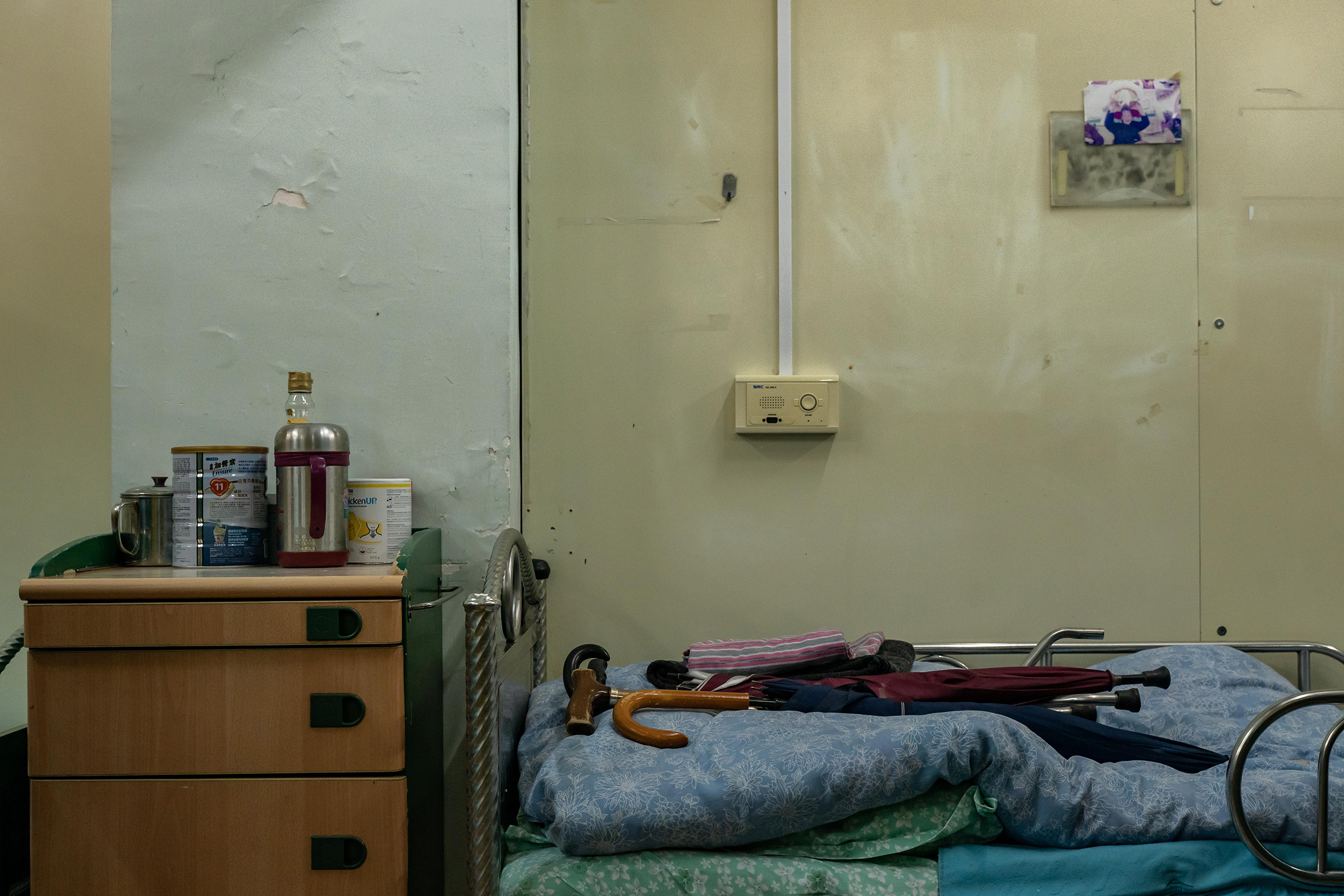
Personal effects left by a deceased resident, seen on a bed at Hong Kong’s Kei Tak (Tai Hang) Home for the Aged.
Anthony Kwan for TIME
More Must-Read Stories From TIME
Source by time.com
