
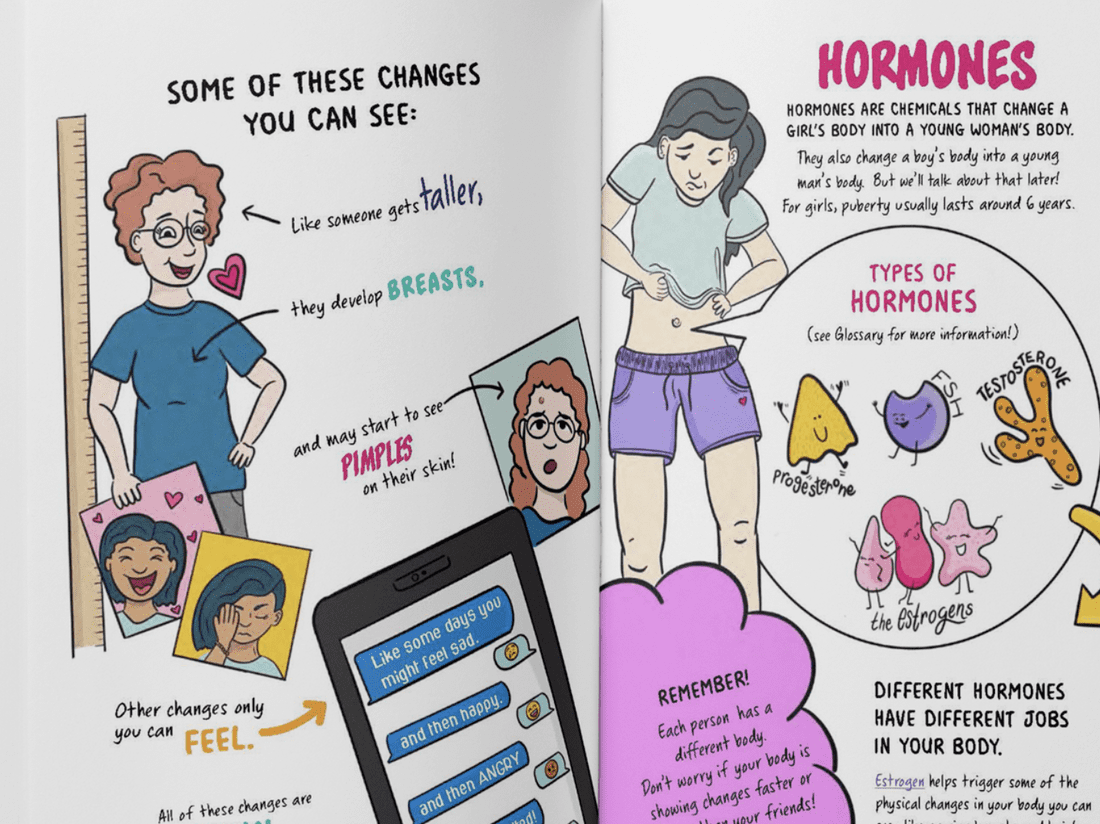
Writer and health educator Marni Sommer is co-author of A Girl’s Guide to Puberty & Periods, which aims to help young people ages 9 to 14 understand the changes that happen in puberty and what to expect when.
Grow & Know/Screenshot by NPR
hide caption


toggle caption
Grow & Know/Screenshot by NPR
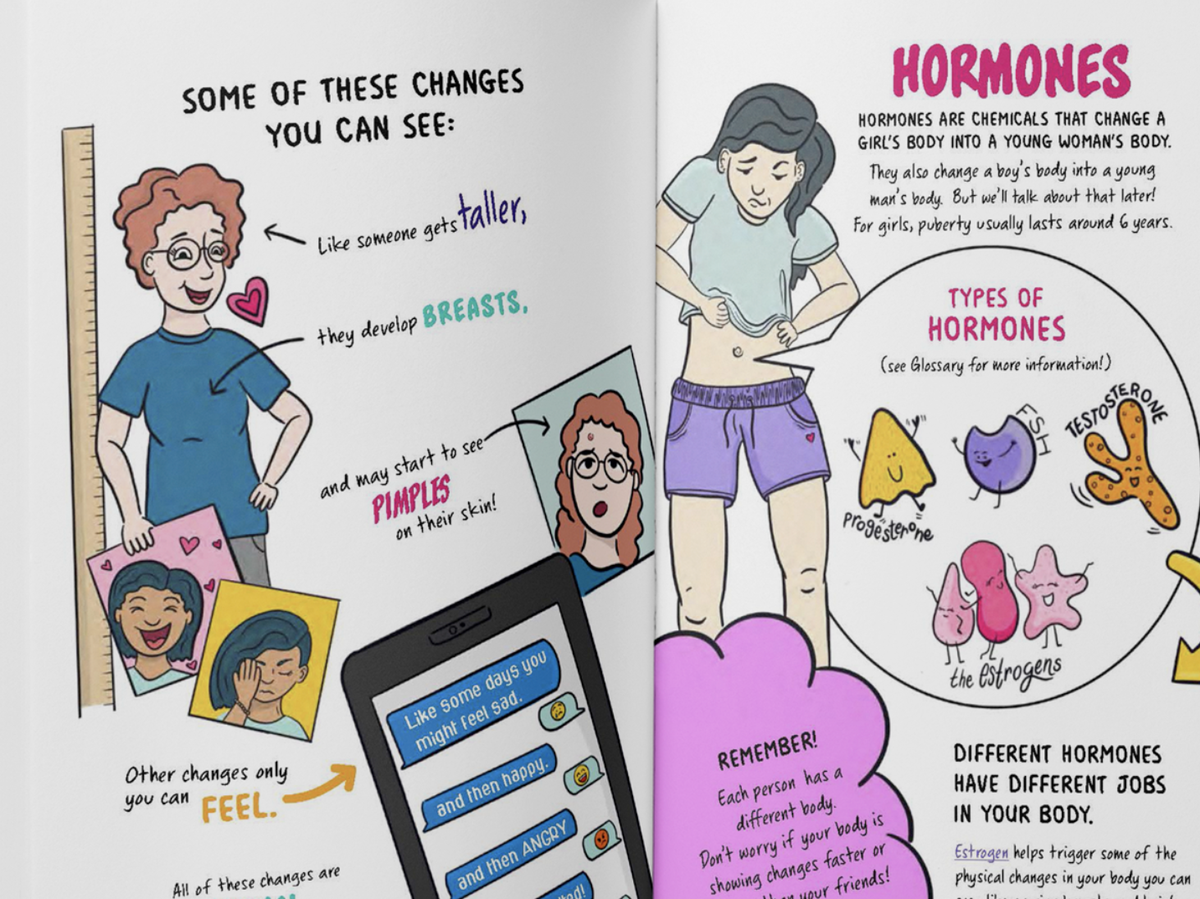
Writer and health educator Marni Sommer is co-author of A Girl’s Guide to Puberty & Periods, which aims to help young people ages 9 to 14 understand the changes that happen in puberty and what to expect when.
Grow & Know/Screenshot by NPR
One thing few people have been talking about since Roe v. Wade was overturned is how abortion restrictions will affect young girls across the United States.
Around the time of their first period, many young people learn the basic mechanics of managing their periods, such as how to put on a pad or tampon and that it happens once a month. Traditionally they might also receive some admonishment to keep their period hidden. Young people may get information about menstruation from a family member, friends or a teacher, or by searching on the internet.
But often it is only later that they learn and truly understand the more complex details about the menstrual cycle. This includes guidance around regular and irregular patterns and when to seek medical care for any shifts in timing, duration or the overall experience, including the severity of menstrual pain or heavy bleeding. These conversations also have clear implications for ovulation and pregnancy prevention.
Now, with the overturning of Roe v. Wade, young people who begin to menstruate will also need to learn early on how to recognize a missed period as soon as possible. In the past, a young person’s delay in mentioning that a period was late or skipped a few months might not have presented any particular urgency. However, going forward, in contexts where a ban on abortions beyond a very short period of weeks exists, even one missed period could have serious implications for a young person’s life.
Conversely, it’s critical that young people know that irregular periods can be normal and that it’s not always cause for alarm.

I have been researching young people’s experiences with menarche — the onset of menstruation — around the world for almost 20 years. In 2018, my team began to explore the experiences of American girls with their periods, including their recommendations for what all young girls need to know as they enter puberty and begin to menstruate.
Based on those suggestions and insights, we published A Girl’s Guide to Puberty & Periods, a body-positive illustrated graphic novel-style book that includes first-period stories, advice and questions written by girls.
Globally, I have learned that girls growing up in Africa, Asia and here in the U.S. often receive inadequate information and support about their periods.
Information about menstruation is inadequate
Menstrual health literacy, or a person’s understanding of the menstrual cycle and its intersection with one’s health and well-being, is essential from the time leading up to the first menstrual period through menopause.
Both the American College of Obstetricians and Gynecologists and the American Academy of Pediatrics have recommended that just as doctors and nurses check someone’s blood pressure or temperature at each visit, they should also ask about periods.
These professional societies suggest that health care providers prepare girls and their families for the onset of menstruation and ensure that they understand the variation in menstrual patterns.
My team’s U.S. study focused on adolescent girls in Los Angeles, New York and Chicago. Our findings, along with research on state-level menstruation education standards across the country, suggest that the U.S. is a long way from delivering menstrual health literacy to the population. Our research indicated that many girls received no guidance before their first period or had been given information that felt dated and hard to relate to. Think educational videos made in the 1990s.
A recent publication from the U.S. Centers for Disease Control and Prevention found that the median age of onset of menstruation decreased from 12.1 years old in 1995 to 11.9 by 2017. This means that nowadays, many girls are in elementary school when they get their first period.
For this reason, it’s clear that young people in fourth or fifth grade need to be receiving health education that addresses menstruation. Girls who do not receive education and support — particularly those who get their first period at a young age — are more likely to experience depression and low self-esteem. Low-income and minority girls are particularly vulnerable.
Yet many American girls still do not learn the basic facts about their menstrual cycles at home or school or from health care providers. As our study found, parents are often uncomfortable discussing periods, perhaps because it feels too linked to sexuality.
Our research also captured American girls’ first-period stories across 25 states and found that many young people are afraid and ashamed and do not know whom to ask for advice when their menstruation starts.
Glamour
YouTube
Missed opportunities abound
The internet and social media, which are important sources of news and guidance for many young people, may deliver misinformation or reinforce menstrual stigma. And a 2020 study of members of the American Academy of Pediatrics found that 24% of pediatricians surveyed do not regularly provide guidance before the first period. Furthermore, 33% do not discuss periods with their menstruating patients. Male pediatricians were also less likely to assess a patient’s menstrual cycle and provide information, perhaps because of discomfort with the topic.
Schools also may not be delivering the necessary guidance. In New York state, where I work, there is no requirement for the provision of menstrual health education, and sex education is not required to be taught or to be medically accurate. Only 30 states and Washington, D.C., mandate sex education in schools, but not all of them require medical accuracy.
It’s hard to know if many states are even including menstrual health in the curriculum, as data is limited and public information is not always available. I believe that, given the critical importance of some menstrual health literacy by late elementary school, schools could consider delivering puberty education — including menstrual health — separate from sex education. This is particularly true in states that are hesitant to mandate sex education.
Menstrual health literacy translates to health literacy
One survey of women of childbearing age suggested that only about 50% knew the average number of days of a regular menstrual cycle. Not knowing what is normal or not normal in relation to an average menstrual cycle — ranging from how often you get your period to the extent of bleeding or pain experienced — increases the health risk for an adolescent girl or woman.
TED
YouTube
Health — including menstrual health — is a basic human right. For those who menstruate, this means a right to menstrual health literacy, along with being able to seek care for the myriad menstrual and reproductive health disorders. These range from dysmenorrhea, or severe pain, to endometriosis, a condition in which endometrial tissue grows outside the uterus and can cause menstrual irregularities and significant discomfort. Both require diagnosis and treatment.
Menstruation is an issue of public health and one long overdue for increased attention and resources, starting with — but not limited to — menstrual health literacy. The fall of Roe adds urgency to this public health priority.
This story was originally published in the online magazine The Conversation. Marni Sommer is a registered nurse, an associate professor of sociomedical sciences at Columbia University and receives funding from the Bill & Melinda Gates Foundation to develop guidance on indicators and related measures for improving national-level monitoring of progress on menstrual health and hygiene globally.
Source by www.npr.org
